
The British Railway Clock Specialist
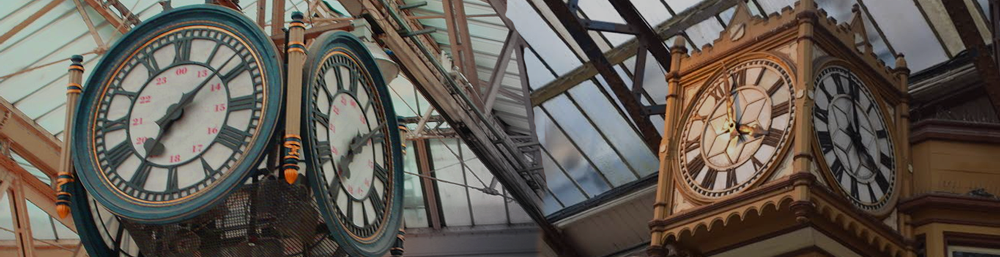
Simon Turner The British Railway Clock Specialist, Welcomes you to Railway Clocks.net
My website gives up to date information on all aspects of British Railway clocks, including advice on collecting, restoring, buying and selling genuine British railway clocks.
The railways of Britain used mainly English dial fusee wall mounted clocks but also purchased many different types, these included mantle clocks, French brass cased drum clocks, industrial style wall mounted regulator clock’s and even clocks from Germany and the USA.
If you would like to see the diversity of different Styles of Railway clocks used by the British Railway companies please have a look at my clocks page and also the for sale page, I have included many pictures of clocks that I have managed to collect and also a page dedicated to Fakes and reproductions ! I hope you enjoy sharing my passion with you.
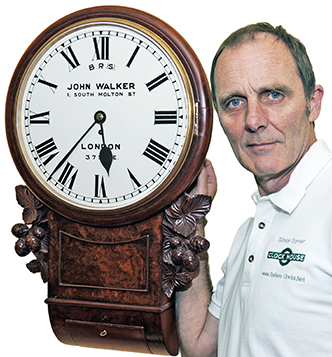

Watch out there’s a faker about ! Check out my Fakes and Reproduction page for the latest information on forged railway clocks, and reproductions. If in doubt you are welcome to contact me for an appraisal I have helped a few people get full refunds on dubious clocks sold on Ebay and at Auction.
Click For More Information
This 19th century railway clock spent 30 years in a damp garden shed and nearly was thrown away ! See my repairs page to see how this clock was expertly conserved and restored by me.
I may be able to advise where to find suitable restorers in your area and can occasionally take commissions on.
Have a look at my FOR SALE page there are usually over 20 clocks listed for sale and I carry around 40 in stock at any one time. All Genuine and guaranteed and available from many pre grouping railway companies and also post grouping examples from the S.R. G.W.R. L.M.S. and L.N.E.R.
Click For More Information
Thanks very much for the info. I do remember the Manager of the Clock & Watch section saying it was of GN origin, so to have the actual location is fantastic.
Thank you for the information you sent me, at the time I was given the clock Upwell tram station was mentioned so your info confirms that.
Crikey, that was quick! Thanks very much for information It was good to know that the clock was from York. I live in Gloucestershire now but I spent much of the 70s and 80s in Yorkshire and York was our main town. And I also have fond memories of York Station.